
Our History


A Tradition of Excellence for Over 125 Years
Our Story
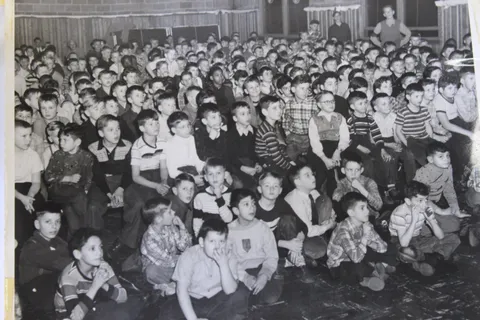
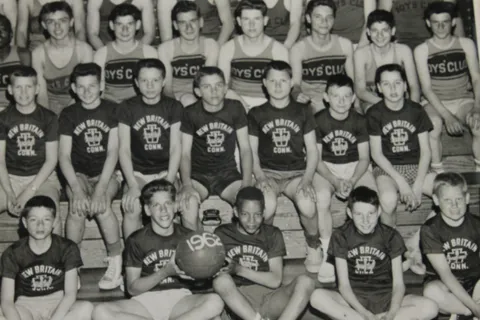
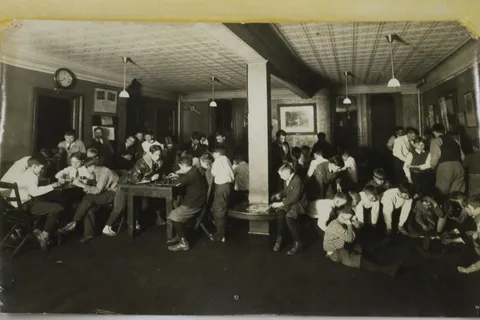
The Boys Club of New Britain was founded on March 10, 1891, by a group of concerned citizens led by John C. Eastman, the Secretary of the Connecticut Auxiliary Committee on Work for Boys. The Club was modeled after the Club that was founded in 1860 in Hartford. The group of volunteers raised $100 to open the Club's doors in the Herald Hall on Church Street, offering a place where 400 boys could participate in sports, recreation, and learn basic skills.
Over the next 115 years, the Club witnessed significant events in American history, including the inauguration of 21 presidents, the first flight of the Wright Brothers, the invention of the horseless carriage, the settlement of the Western frontier, two world wars, several world conflicts, the invention of the electric light bulb, radio, television, the computer, and the landing of a man on the moon.
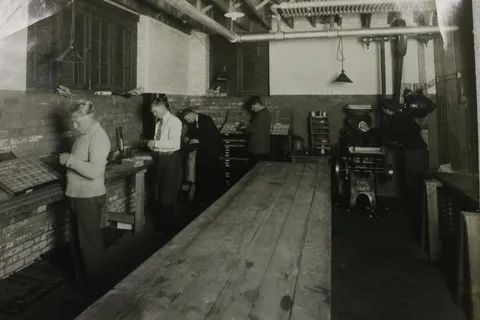
At the turn of the century, the city of New Britain was experiencing growth as a nation with the Industrial Revolution in high gear, and it was a magnet for immigrants from all over the world. The Boys Club became an integral part of the family life of those immigrants by helping them adapt to their new country and providing them with many of the skills they needed to survive. The Boys Club provided a safe haven where boys of any nationality, race, or religion could come and develop important physical, mental, and moral skills.
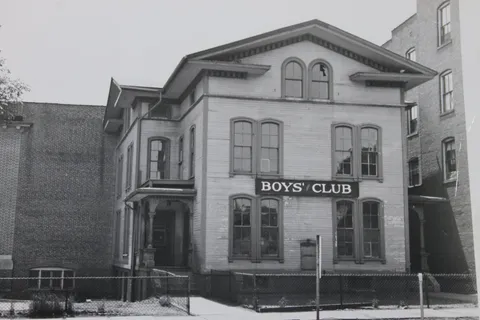
The New Britain Club continued to grow in size and stature and moved to a two-family wooden house on East Main Street in 1916. It was at this location that the Club offered dormitories for boys who were without homes. In 1920, the Club dedicated a new gymnasium, which enabled it to better serve its over 900 members.
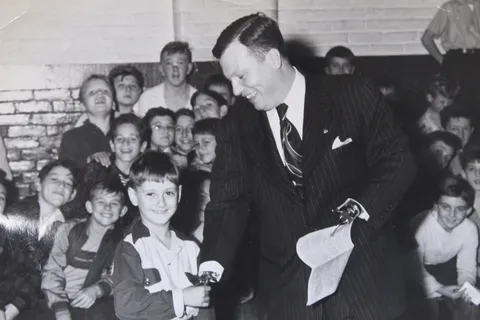
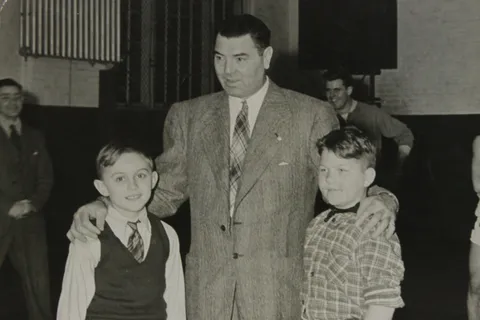
In 1934, the Club's application for membership in the Boys Club Association of America was approved, marking the beginning of an era in its evolution with the hiring of Dwight Skinner as its Executive Director, a position he would retain for the next 39 years. Mr. Skinner founded the Ladies Auxiliary of the New Britain Boys Club, which became invaluable during the Great Depression of the 1930s when the Community Chest collapsed, leaving the agencies it supported, such as the Boys Club, without funding. The Ladies Auxiliary, in tandem with Skinner and the Board of Directors, developed the means to maintain operations at the Club without interrupting services, despite the devastating economic conditions of the period.
The Club celebrated its 50th anniversary in 1941, and once again saw many of its sons march off to war. However, the Club became the central caretaker for many boys whose mothers were working in defense plants, and whose fathers were off fighting the war. It was the Boys Club that helped preserve the family structure during a time which is considered to be one of the darkest the world has ever known.
A brick building replaced the original wooden structure in 1950, and the Abbe Memorial Swimming Pool was dedicated in 1957. Following Skinner's premature death in 1962, John Karbonic was appointed Executive Director, serving for the next 20 years.
Construction of Route 72 prompted a capital campaign to relocate the Club in 1971. The following year, the Angelo Tomasso Sr. Memorial Scholarship was established, and the Club dedicated its current home at 150 Washington Street.
As the Club entered the 1980s, it continued adapting to the increasingly complex needs of New Britain's youth. Stan Glowiak assumed leadership in 1983, membership reached an all-time high of 1,654 in 1986, and the following years brought Nazzarena Tomasso Park, the Ernie Brainard Learning Center, and the addition of Camp Schade. Once again, the Ladies Auxiliary was there to establish the John Karbonic Scholarship.
A significant new chapter began on February 26, 1992, when the Boys Club officially became the Boys & Girls Club of New Britain, opening its doors to the city's young female population. The building was renovated and rededicated later that year, and Todd Czuprinski was appointed Executive Director as the Club prepared to meet the changing needs of a new generation.
Technology and new programming continued to reshape the Club. A computer lab and technology center were added. In 2005, after decades of dedicated service, the Ladies Auxiliary disbanded.
In 2006, the Club celebrated the 100th anniversary of Boys & Girls Clubs of America, an especially significant milestone because the New Britain Club was one of the first 53 Clubs that united in Boston in 1906 to form the Federated Boys' Clubs. That same year, Judith K. Greco, a respected local educator, community leader, and longtime board member, became the first woman board president.
During this period, the Club began planning significant improvements to its aging facility while focusing its programs on academic success, good character and citizenship, and healthy lifestyles. These priorities helped shape a $3 million capital improvement and endowment campaign to renovate and modernize the Club and strengthen its future.
Under Greco's leadership, board members Paul D'Addabbo and Lindsley Wellman were selected to chair the campaign committee. Despite the Great Recession of 2008–2009, the campaign moved forward under the leadership of longtime board member Michael Timura and Executive Director Todd Czuprinski, with renovation projects progressing as funds were raised.
As the economy recovered, the campaign reached its goal, bringing improvements throughout the Club's nearly 44,000 square feet of operating space. In 2012, Board President Paul D'Addabbo reported that the final construction projects were underway. The D'Addabbo and Czuprinski leadership team, with Timura's continued involvement, successfully brought the campaign and renovation projects to completion.
As D'Addabbo passed board leadership to Stan Szczepanik—a community leader, businessman, and New Britain Boys & Girls Club alumnus—the Club continued evolving its approach to youth development. New technologies, outcome measurement, and programs including SMART Girls, Power Hour/Homework Club, Young Chefs, and ACE reflected an increasing emphasis on measuring impact and serving the whole child.
In 2016, the Boys & Girls Club of New Britain celebrated its 125th anniversary, marking more than a century of service to the children and families of the community.
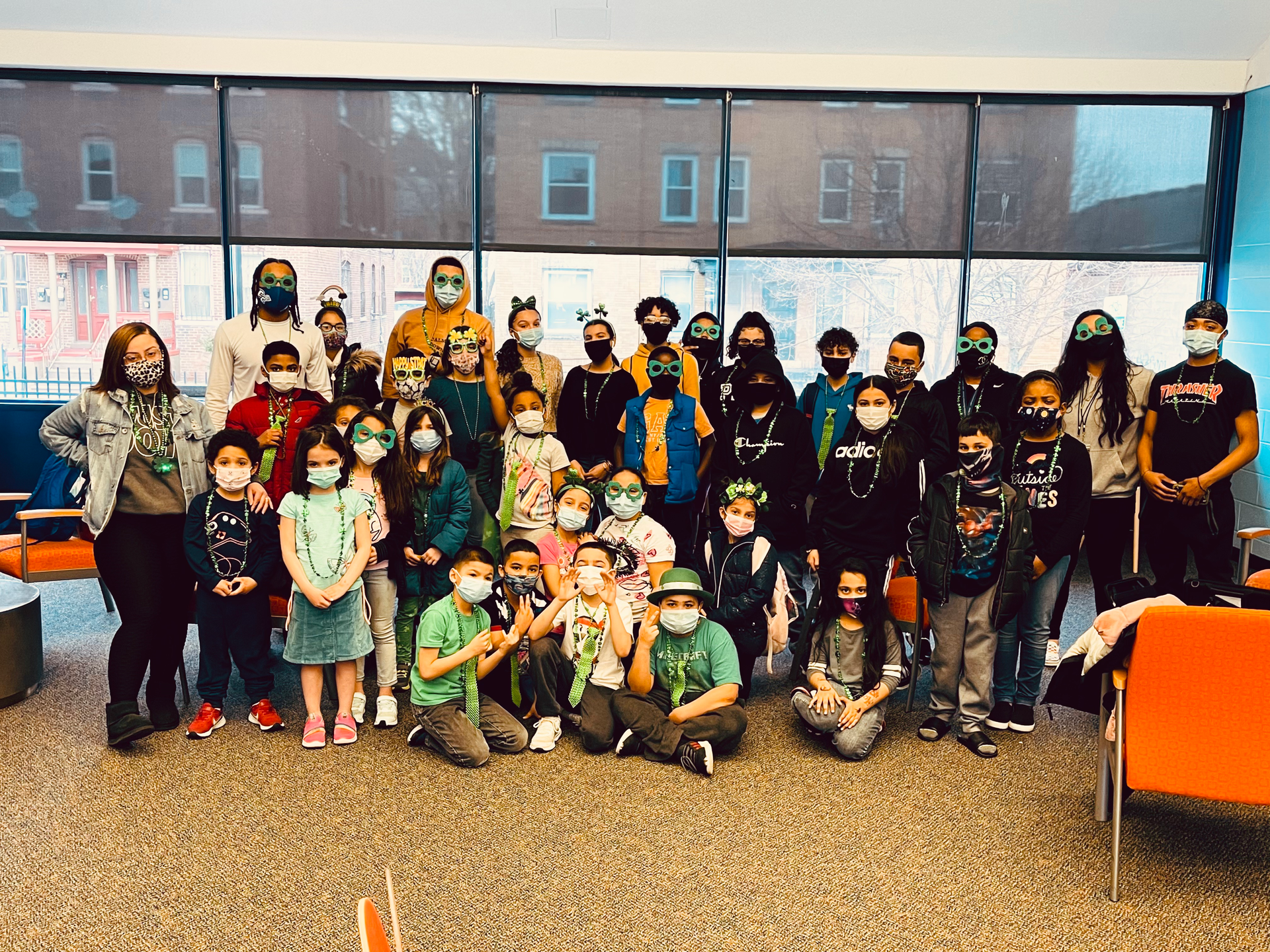
Four years later, the Club faced another defining moment in its history. In 2020, the COVID-19 pandemic created unprecedented challenges for New Britain's children and families. James Jones joined the Club that summer as Executive Director. With most students attending school remotely, the Club opened its doors during the school day, providing a safe and supportive place where young people could participate in online learning while their families continued to work.
Once again, during a time of tremendous uncertainty, the Boys & Girls Club of New Britain adapted to meet the needs of its community—just as it had during the Great Depression, World War II, and generations of social and economic change.
Today, the Boys & Girls Club of New Britain continues to build upon more than 135 years of service. Programs and services may change with each generation, but the purpose that inspired a small group of New Britain citizens in 1891 remains at the heart of the organization: providing young people with a safe, supportive place to learn, grow, and reach their full potential.